

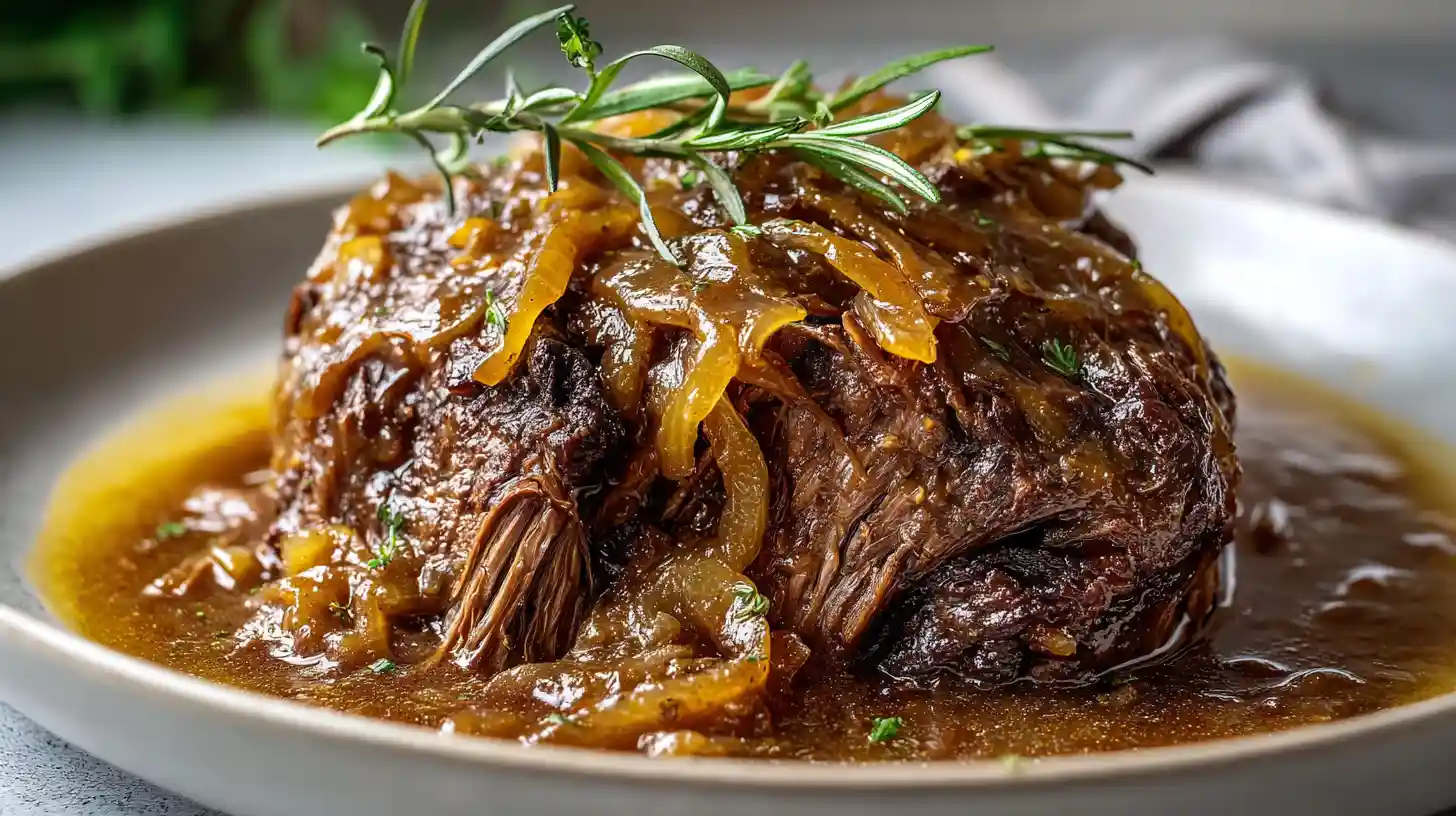
Sunday afternoons at my house mean the smell of this Comforting French Onion Pot Roast filling every corner. I started making it years ago when I needed cozy dinners comfort foods that didn’t chain me to the stove, and honestly, it’s become our go-to for lazy winter weekends. The beef gets so tender it practically melts, and those sweet caramelized onions create the most incredible gravy.
What I love most is how hands-off it is. You sear the meat, pile on the onions, and let the oven do its magic for a few hours while you curl up with a book or catch up on laundry. It’s one of those cozy easy meals that tastes like you worked way harder than you actually did.
Picking the Right Cut
Chuck roast is king here. Look for a piece around 3 pounds with good marbling running through it. Those white streaks of fat break down during the long, slow cook and keep everything juicy. I grab mine from the butcher counter rather than the pre-packaged section because they usually have better marbling.
Bottom round works if chuck isn’t available, though it runs a bit leaner. Arm roast is another solid backup. Skip anything labeled “eye of round” or “sirloin tip” because they’ll turn tough and stringy no matter how long you cook them.
Ingredients You’ll Need
- 3 pounds boneless chuck roast
- 2 tablespoons olive oil, divided
- 1 teaspoon sea salt
- 1 teaspoon black pepper
- 3 pounds yellow onions, sliced thin
- 3 garlic cloves, minced
- 1 tablespoon all-purpose flour
- 1 tablespoon maple syrup or brown sugar
- 1 cup dry red wine
- 2½ cups beef stock
- 2 sprigs fresh rosemary
- 2 bay leaves
Don’t stress if your onions aren’t perfectly uniform. They cook down so much that size differences won’t matter by the end. Fresh rosemary beats dried every time for this recipe, but in a pinch, use about 1 teaspoon dried instead of the fresh sprigs.
Building Flavor Step by Step
Pat your roast completely dry with paper towels. Wet meat won’t brown properly, and that golden crust is where tons of flavor lives. Season all sides generously with salt and pepper, getting into every crevice.
Heat 1 tablespoon olive oil in your Dutch oven over medium-high heat until it shimmers. Add the roast and resist the urge to move it around. Let it sit undisturbed for 5-6 minutes per side until deeply browned. You’re building a foundation of flavor here, so take your time. Once all sides are seared, remove it to a plate.
Drop the heat to medium and add the remaining tablespoon of oil to the same pot. Toss in your sliced onions with a pinch of salt. They’ll look like a mountain at first, but they shrink dramatically. Cook them low and slow for 20-25 minutes, stirring every few minutes, until they turn golden and sweet. This is not the moment to rush.
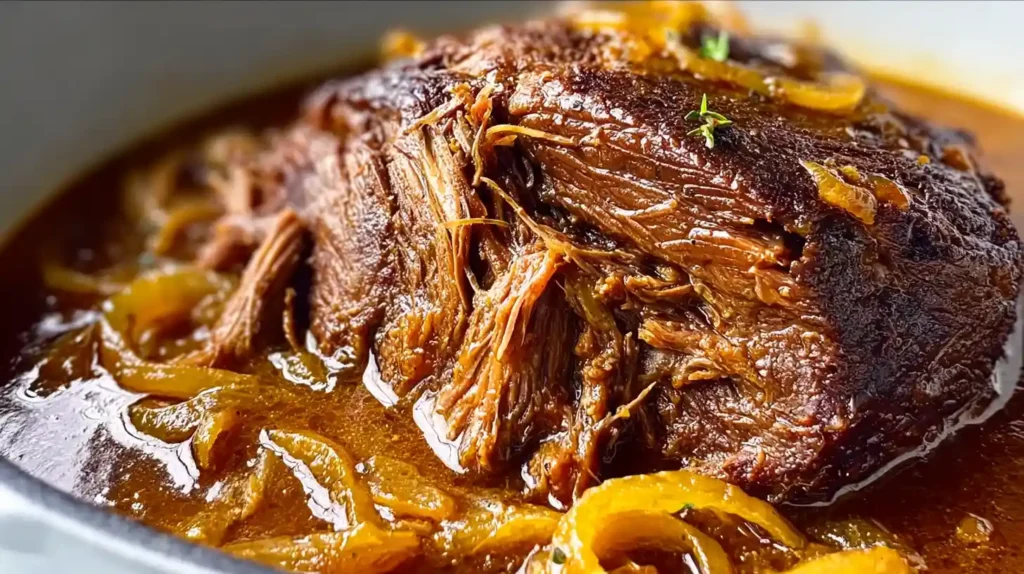
Stir in the garlic and maple syrup once the onions are soft. Cook another 2 minutes until fragrant. Sprinkle the flour over everything and stir well for about a minute. It’ll look pasty, but that’s exactly right.
Pour in the wine and scrape up all those tasty brown bits stuck to the bottom. Add the beef stock, rosemary, and bay leaves. Bring it to a gentle simmer, then nestle your seared roast back into the pot. The liquid should come about two-thirds up the sides of the meat.
Cover with a tight lid and slide it into a 300°F oven. Walk away for 3 hours. Seriously, just let it be. After 3 hours, flip the roast if you can manage it without it falling apart, then give it another 30-45 minutes until fork-tender.
Smart Swaps and Tweaks
No wine? Use extra beef stock plus a tablespoon of balsamic vinegar for depth. The vinegar mimics that acidic brightness wine provides. For dinners for winter when you want extra richness, add 2 tablespoons of tomato paste along with the garlic.
Sweet onions or white onions substitute fine for yellow, though yellow gives the best balance. If you’re prepping this as a Thanksgiving pot roast, double the rosemary for a more herbaceous profile that pairs beautifully with traditional sides.
Want it spicier? Add a teaspoon of whole peppercorns and a pinch of red pepper flakes to the braising liquid. For a thicker gravy, pull the roast out when done and simmer the liquid uncovered on the stovetop for 10 minutes to reduce it.
Serving This Sunday Dinner Recipe
This absolutely shines over creamy mashed potatoes that soak up all that onion gravy. Buttered egg noodles work beautifully too if you want dinner ideas no pasta never crossed your mind. I pile it high and let the sauce pool around everything.
Roasted root vegetables make perfect winter easy dinners companions. Carrots, parsnips, and turnips roast right alongside the pot roast for the last hour. Toss them with olive oil, salt, and pepper, spread on a baking sheet, and slide them in.
A simple green salad with a sharp vinaigrette cuts through the richness. Crusty bread is non-negotiable for mopping up every drop of that incredible sauce. I buy a good sourdough or French loaf and warm it in the oven while the roast rests.
Reheating and Leftovers
This is one of those good reheatable meals that actually improves overnight. The flavors meld together and deepen after sitting in the fridge. Store the meat and gravy together in an airtight container for up to 4 days.
Reheat gently on the stovetop over low heat, adding a splash of beef stock if the gravy got too thick. Microwave works for single portions, just use medium power and stir halfway through. The meat stays tender as long as you don’t blast it on high heat.
Freezing works great for up to 3 months. Let it cool completely, then portion into freezer-safe containers with plenty of gravy covering the meat. Thaw overnight in the fridge before reheating. I love having this stashed away for those nights when cooking from scratch feels impossible.
Tips for Perfect Results
Don’t skip the searing step even though it’s tempting. That caramelized crust adds layers of flavor you can’t get any other way. Make sure your pot is actually hot before adding the meat, or it’ll stick and steam instead of brown.
Low and slow wins the race here. Cranking the oven to 350°F might seem like a time-saver, but you’ll end up with tough, chewy meat. Keep it at 300°F or lower for that fall-apart texture. Check the liquid level halfway through and add more stock if it looks low.
Resting matters. Let the roast sit in its cooking liquid for 10-15 minutes after pulling it from the oven. This lets the juices redistribute so every bite stays moist. Fish out those bay leaves and rosemary sprigs before serving because biting into a whole bay leaf is nobody’s idea of fun.
FAQ
Can I make this in a slow cooker instead?
Absolutely. Sear the meat in a skillet first, then transfer everything to your slow cooker. Cook on low for 8-10 hours or high for 5-6 hours. The oven gives slightly better caramelization, but slow cookers work perfectly when you’re out all day.
How do I know when the pot roast is done?
It should shred easily with two forks. If you poke it and it still feels firm, give it another 30 minutes. Every roast is slightly different depending on size and marbling, so go by texture rather than exact time.
What’s the best wine to use?
Any dry red works well. Cabernet, merlot, or pinot noir are my favorites. Skip anything sweet or labeled “cooking wine” because they’ll make the gravy taste off. If you’d drink it, you can cook with it.
Can I cook this at a higher temperature to speed it up?
Not recommended. Higher heat toughens the meat instead of breaking down the connective tissue. If you’re really pressed for time, use an Instant Pot on high pressure for 90 minutes with natural release instead.
Why are my onions burning instead of caramelizing?
Your heat is too high. Drop it to medium-low and stir more frequently. Add a splash of water or stock if they start sticking before they turn golden. Patience is key for proper caramelization.
How much does this recipe feed?
A 3-pound roast easily serves 6-8 people with generous portions. We’re usually four at dinner and have plenty of leftovers for lunches the next day. Scale up to a 4-5 pound roast for bigger crowds, adding an extra hour of cooking time.
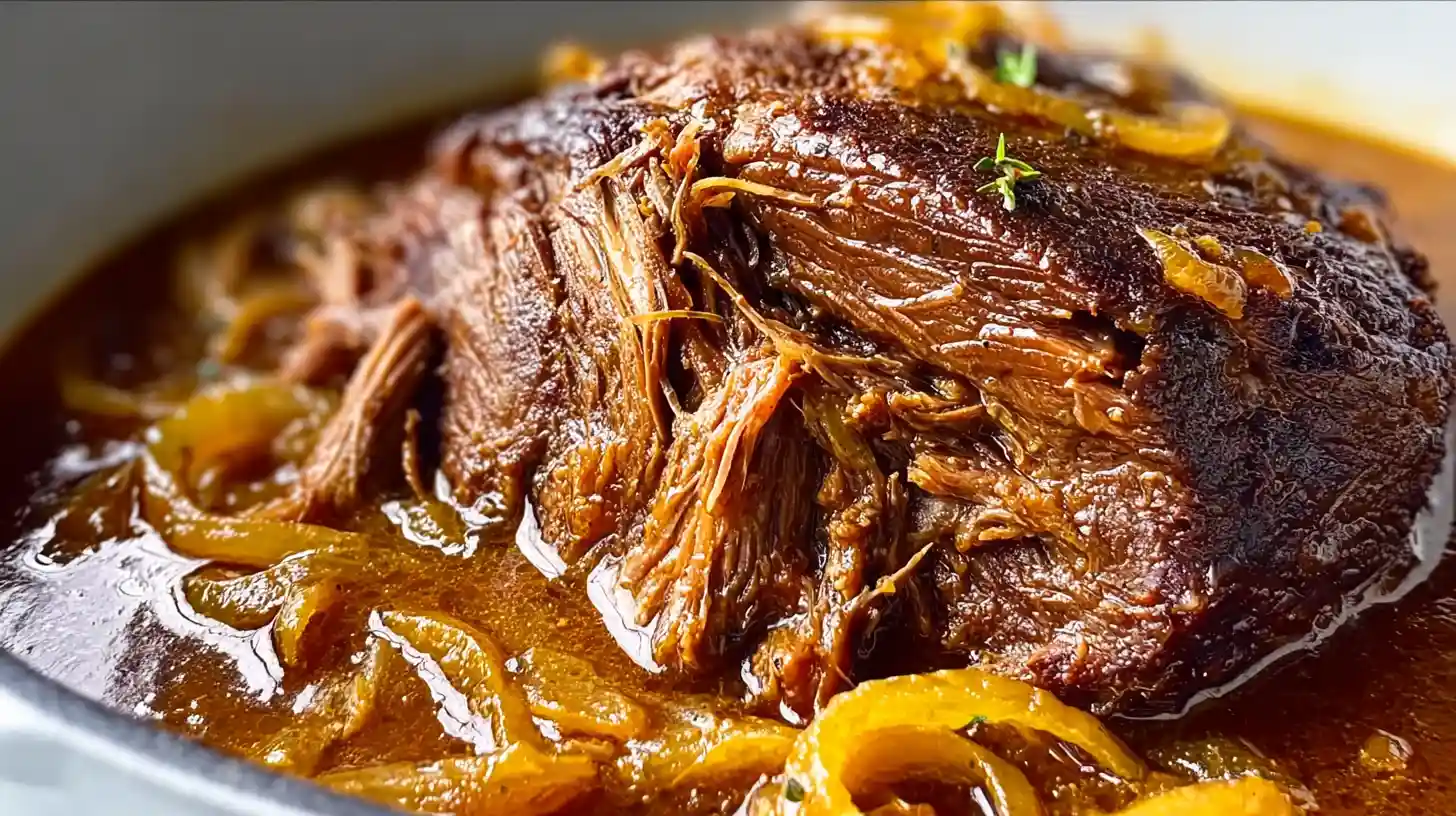
Comforting French Onion Pot Roast
Ingredients
Equipment
Method
- Preheat oven to 300°F. Pat chuck roast dry with paper towels and season all sides with salt and pepper.
- Heat 1 tablespoon olive oil in Dutch oven over medium-high heat. Sear roast 5-6 minutes per side until deeply browned on all sides. Remove to a plate.
- Reduce heat to medium and add remaining oil. Add sliced onions with a pinch of salt. Cook 20-25 minutes, stirring occasionally, until golden and caramelized.
- Stir in garlic and maple syrup. Cook 2 minutes until fragrant. Sprinkle flour over onions and stir for 1 minute.
- Pour in wine and scrape up browned bits from bottom of pot. Add beef stock, rosemary, and bay leaves. Bring to a simmer.
- Nestle roast back into pot. Liquid should come two-thirds up the sides. Cover tightly and transfer to oven.
- Braise for 3 hours. Flip roast carefully, re-cover, and cook another 30-45 minutes until fork-tender.
- Remove from oven. Discard rosemary and bay leaves. Let rest 10-15 minutes before serving with gravy.
Notes
- Don’t skip the searing step – it builds essential flavor.
- Keep oven at 300°F or lower for tender, fall-apart meat.
- Leftovers keep for 4 days refrigerated or 3 months frozen.