

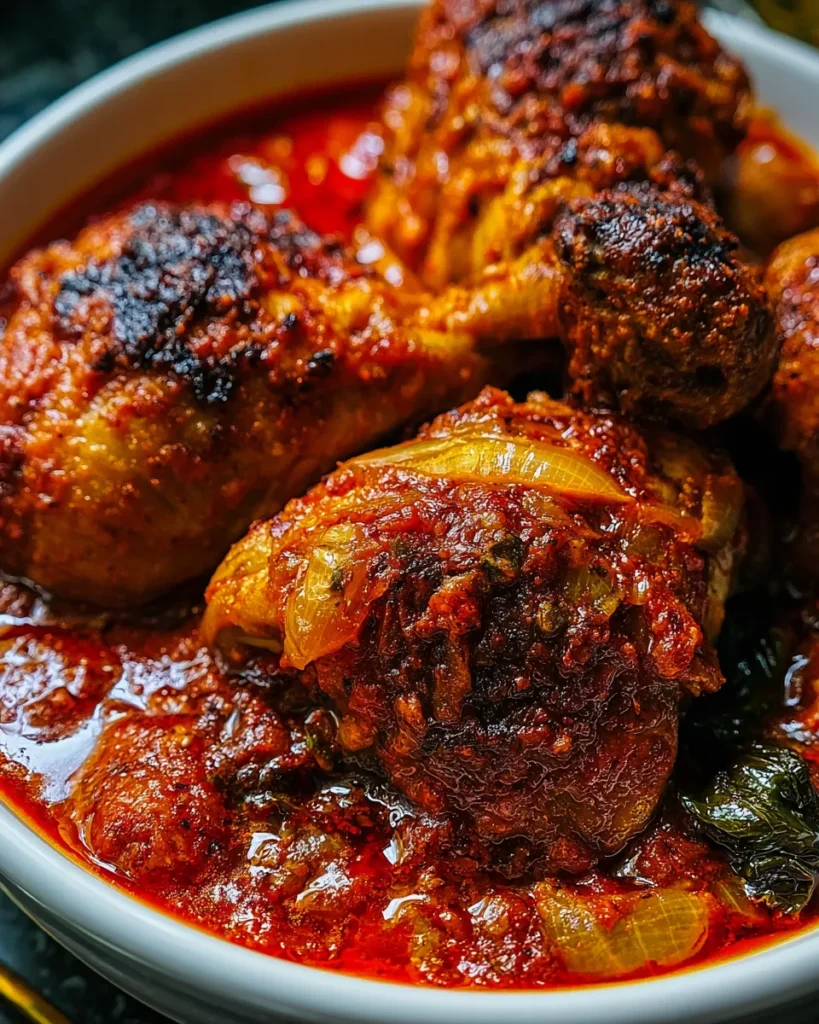
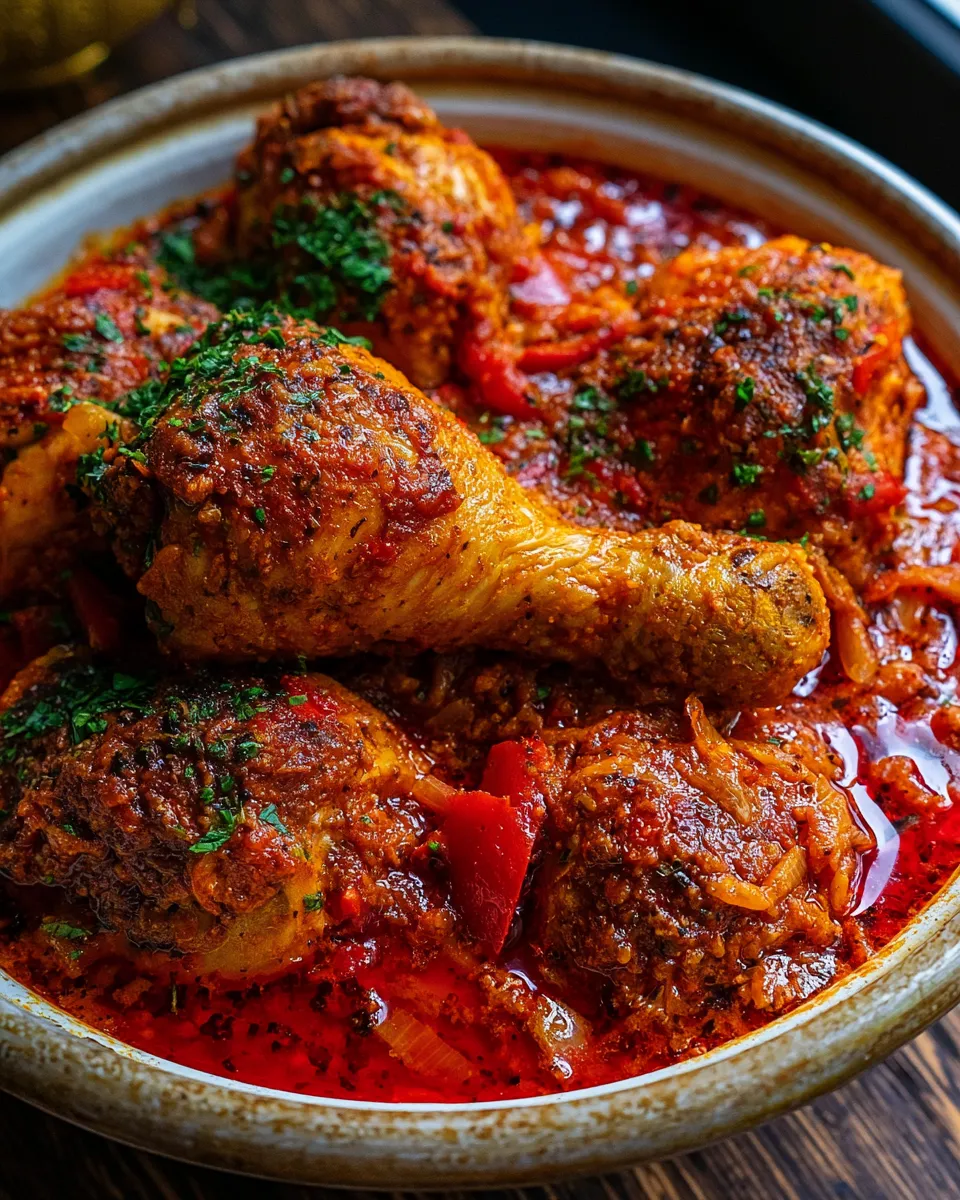
The best Nigerian Chicken Stew Recipe is bold, rich, and a little glossy from the pepper sauce that coats every piece of chicken. It starts with browned chicken and a blended base of tomatoes, red bell peppers, onions, and Scotch bonnet, then simmers until the flavors settle into something deep and satisfying. This is the kind of stew that tastes even better after a short rest, which is one reason it shows up so often in African chicken stew recipes.
It is one of those dinner stew recipes that can be served in several ways, over rice, with boiled yams, or with fried plantains on the side. The method is simple, but a few details matter, especially the browning and the reduction time. Once those are handled well, the finished stew has that classic Nigerian flavor people look for in pepper sauce chicken.
Ingredients for Nigerian Chicken Stew Recipe
Use bone-in chicken for the deepest flavor, but boneless works if you want a quicker cook. The pepper base is where most of the flavor comes from, so do not rush the simmer. Let the tomatoes and peppers cook down fully or the stew will taste sharp instead of rounded. This is one of those easy African dishes that benefits from patience more than extra ingredients.
- 3 pounds bone-in chicken thighs and drumsticks
- 1 teaspoon salt, plus more to taste
- 1 teaspoon black pepper
- 1 teaspoon smoked paprika
- 1 teaspoon curry powder
- 1 large onion, half sliced and half blended
- 4 medium tomatoes
- 3 red bell peppers, seeded and chopped
- 1 to 2 Scotch bonnet peppers, seeded for less heat if desired
- 4 cloves garlic
- 2 tablespoons tomato paste
- 1/3 cup vegetable oil
- 1 cup chicken stock
- 1 teaspoon dried thyme
- 2 bay leaves
- 1 tablespoon chicken bouillon powder or 1 bouillon cube, optional
- 2 tablespoons chopped fresh parsley or green onions for garnish
How to Make the Stew Without Rushing the Flavor
The chicken should be seasoned first so the spices have a chance to soak in while you prepare the pepper mix. Browning the chicken gives the stew a richer base, and that step is worth keeping even if you are short on time. After that, the sauce needs to cook until it loses the raw edge from the tomatoes and peppers.
- Season the chicken with salt, black pepper, smoked paprika, and curry powder. Rub the seasoning in well and let it sit for 15 minutes if possible.
- Heat 2 tablespoons of the oil in a large pot over medium-high heat. Brown the chicken on both sides for about 3 to 4 minutes per side, then transfer it to a plate. It does not need to cook through at this stage.
- Blend the tomatoes, red bell peppers, Scotch bonnet, garlic, and half the onion until smooth. You want a thick puree, not a watery juice.
- Heat the remaining oil in the same pot. Add the sliced onion and cook for 3 minutes until softened. Stir in the tomato paste and cook for 1 minute more.
- Pour in the blended pepper mixture. Add thyme, bay leaves, and bouillon if using. Cook uncovered for 20 to 25 minutes, stirring often, until the sauce darkens, thickens, and the oil begins to float slightly around the edges.
- Add the browned chicken and any juices from the plate. Pour in the chicken stock, reduce the heat to medium-low, and simmer for 25 to 30 minutes until the chicken is tender and the sauce has reduced to a rich stew consistency.
- Taste and adjust salt. Remove the bay leaves. Garnish with parsley or green onions before serving.
That long simmer is what gives the stew its proper body. If the sauce still looks thin near the end, keep cooking uncovered for another 5 to 10 minutes. A good Nigerian chicken stew should cling to the chicken rather than pooling like soup.
Pro Tips for a Better Stew
Do not skip the browning step. The chicken may not look finished, but the browned surface gives the stew more flavor once it simmers in the sauce. That extra color also helps the dish fit the style people expect from most liked recipes in this category.
Keep an eye on the oil level near the end of cooking. In many Western dishes recipes, excess oil would be drained, but here a little oil separation is part of the stew’s character. It tells you the sauce has reduced enough. If there is too much oil, skim a little off the top, but do not remove it all.
Substitutions That Still Taste Right
If Scotch bonnet is too hot, use one habanero or even a jalapeño for a milder version. The stew will still have heat, just less fire. Chicken breasts can replace thighs, though they need less simmering and can dry out faster. If you only have canned tomatoes, reduce the number of fresh tomatoes slightly and add an extra red bell pepper to keep the sauce balanced.
For a deeper savory note, a small amount of bouillon helps, especially when the stew is served as a quick weeknight meal. That said, the dish does not depend on it. The pepper sauce chicken flavor comes mostly from the peppers, onion, and proper reduction.
Ways to Serve It
This stew is extremely flexible. Serve it with steamed white rice for the most classic version, or pair it with fried plantains if you want something sweeter alongside the heat. Boiled yam, cassava, or even mashed potatoes also work well. The sauce is thick enough to spoon over almost anything sturdy.
- With rice for a traditional, simple dinner.
- With plantains for a sweeter contrast.
- With boiled yam for a more filling plate.
- With bread if you want to use every bit of the sauce.
Storage and Reheating
Store leftovers in an airtight container in the refrigerator for up to 4 days. The flavor usually deepens overnight, which makes the next day’s bowl even better. Reheat gently on the stove over low heat, adding a splash of water or stock if the stew has tightened up too much. Avoid high heat, since it can make the sauce split and the chicken toughen.
This stew also freezes well for up to 2 months. Let it cool fully before freezing in portions. Thaw overnight in the fridge and reheat slowly. If the sauce looks slightly looser after thawing, simmer it uncovered for a few minutes and it will come back together.
FAQ
Can I make this Nigerian Chicken Stew Recipe ahead of time?
Yes, and it is actually a good make-ahead dish. The flavors settle as the stew rests, so making it a day in advance can improve the taste. Cool it completely, refrigerate it, and reheat gently before serving. If the sauce thickens too much in the fridge, stir in a little stock or water while reheating.
How spicy is this stew?
The heat depends on how many Scotch bonnet peppers you use and whether you keep the seeds. One pepper gives a noticeable kick, while two peppers makes it much hotter. For a milder stew, remove the seeds and use just one pepper. The stew should be lively, not painfully hot, unless you want it that way.
Why is my stew watery?
Most watery stew problems come from not reducing the pepper base long enough. The tomato and pepper mixture needs time to cook down before the chicken stock goes in. If you add the stock too soon, the finished stew will be thin. Keep cooking uncovered until the sauce looks thick and the oil starts to separate a little at the top.
Can I use only chicken breasts?
You can, but chicken breasts need a shorter simmer so they stay tender. Add them later in the cooking process and check them often. Thighs and drumsticks are more forgiving and usually give the best flavor in African chicken stew recipes because they stay moist while the sauce reduces.
What makes this different from other chicken stews?
The pepper base is the biggest difference. A lot of dinner stew recipes use a light broth or cream base, but this one starts with blended tomatoes, bell peppers, onion, and Scotch bonnet. That gives it the bright red color and bold flavor people associate with Nigerian cooking and other ethnic dishes from the region.
Nigerian Chicken Stew Recipe
Ingredients
Equipment
Method
- Season the chicken with salt, black pepper, smoked paprika, and curry powder. Let it sit for 15 minutes if possible.
- Brown the chicken in 2 tablespoons of oil over medium-high heat, about 3 to 4 minutes per side. Transfer to a plate.
- Blend the pepper base: blend tomatoes, red bell peppers, Scotch bonnet, garlic, and half the onion until smooth.
- Cook the stew base: heat the remaining oil, add the sliced onion, and cook for 3 minutes. Stir in tomato paste and cook 1 minute more. Add the blended mixture, thyme, bay leaves, and bouillon if using. Cook uncovered for 20 to 25 minutes until thick.
- Simmer the chicken: add the browned chicken and juices, pour in chicken stock, and simmer 25 to 30 minutes until tender and the sauce is rich and reduced.
- Finish and serve: taste for salt, remove bay leaves, and garnish with parsley or green onions before serving.
Notes
- Browning the chicken adds depth to the stew, do not skip it.
- Cook the blended pepper base until thick and dark before adding stock.
- Use thighs and drumsticks for the most tender result.
- Stew keeps 4 days in the fridge and freezes well for 2 months.
- Reheat slowly on the stove and add a little stock if needed.